

As the UK games sector faces unprecedented challenges, including historic job losses and collapsing start-up activity, WGGB has seen an increase in poor practice around writing contracts.
According to Making Games in the UK, a recent report from TIGA (the independent game developers’ association), in the year to September 2025, the sector saw the loss of 4,347 jobs, while employment is falling at the fastest rate ever recorded.
Poor practice in respect of the treatment of workers often runs parallel to industry contraction and WGGB has today (15 July 2026) launched a free publication for games writers Videogames writing contracts – a good practice guide.
Videogames writers can be employed under a variety of different contracts which can add to confusion around their rights and remuneration, and the guide leads games writers through the four different employment statuses: employee, freelance, both employee and freelance, or ‘worker’. The aim of the guide is to help writers to achieve fair and equitable terms in the negotiation of their contracts.
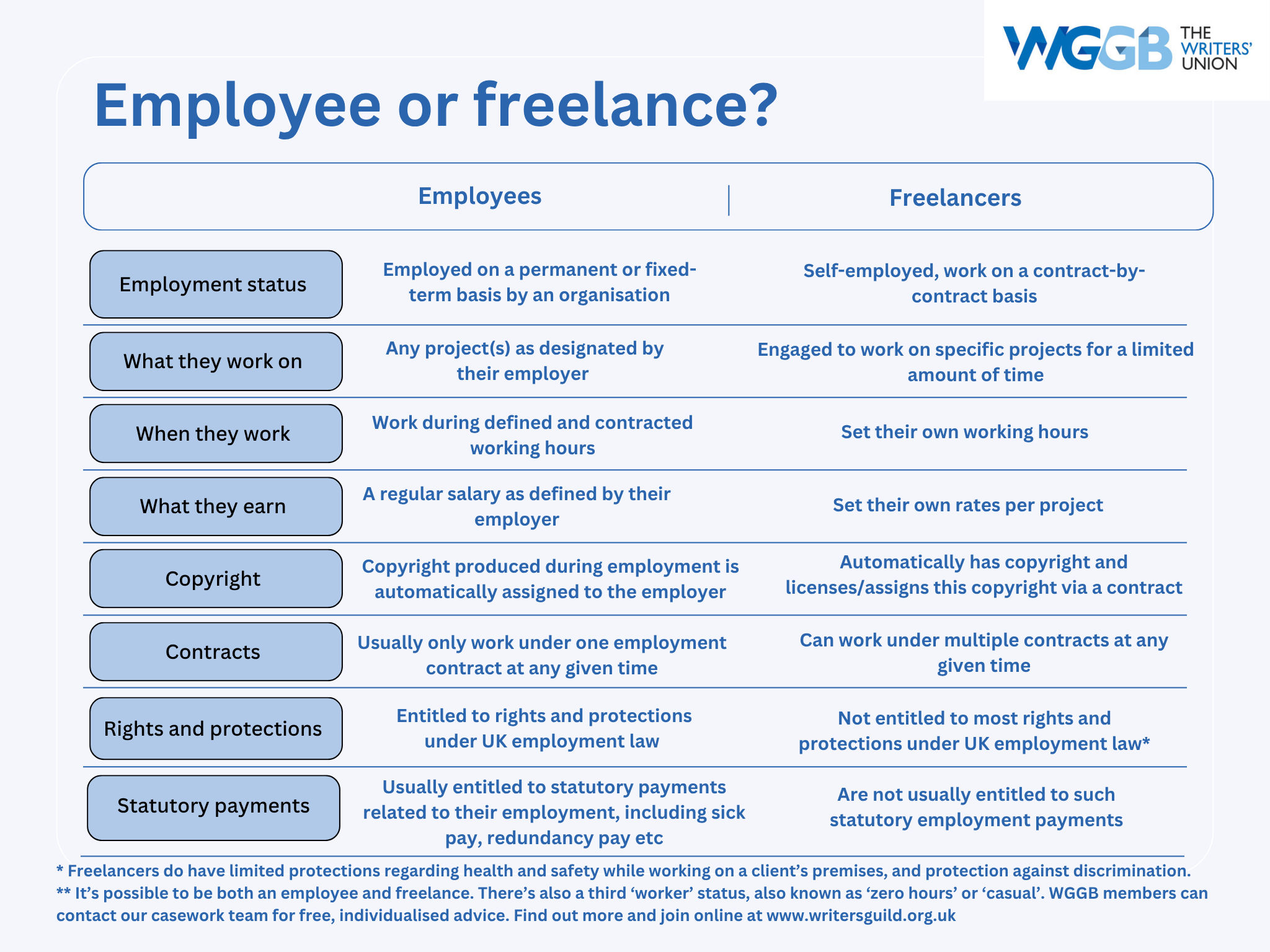
The guide includes an at-a-glance chart (which is also downloadable as an infographic) explaining the difference between ‘employee’ and ‘freelance’ status when it comes to projects, working hours, salary, copyright, contracts, rights, protections and statutory payments. There are checklists so that writers can ensure their contract contains all the necessary clauses, tailored advice if writers are working both as an employee and freelance, an explanation of ‘worker’ status (often known as ‘zero-hours’, ‘low-hours’ or ‘casual’ contracts), plus a section on non-disclosure agreements (NDAs), which WGGB advises against signing. There are also sources of further information, including details of WGGB’s free casework service, which is available to its members, and which provides individualised legal advice and support.
WGGB Videogames Co-Chair Florencia Minuzzi said: “As games writers, especially freelancers, we sign contracts with many different studios, each with their own format and caveats, so ensuring you protect your rights is key. We’ve pooled together our many years of combined experience navigating this area with the WGGB’s legal resources to create easy-to-understand guidelines for industry newcomers and veterans alike. We hope these guidelines serve as a good starting point, giving writers the knowledge and confidence to discuss favourable terms with companies, starting off their relationship from a more equitable position.”
Download the new guidelines here.